A GEO conversion funnel strategy closes the gap between being cited by AI engines and actually generating revenue from that visibility. Most teams celebrate when ChatGPT or Perplexity mentions their brand — then watch the pipeline stay flat. The problem isn't the citation; it's the absence of a structured funnel built to convert AI-driven traffic, which behaves nothing like organic SEO traffic.
Why GEO Conversion Funnels Demand a Different Strategy
The mechanics of how buyers discover products have shifted faster than most conversion rate optimization frameworks have adapted. In 2026, an estimated 68% of B2B SaaS buyers use AI-powered search tools — ChatGPT, Perplexity, Gemini, or Copilot — at some point during a purchase decision. That figure was below 30% just two years ago. The speed of adoption has outpaced the conversion infrastructure most marketing teams have in place.
A classic SEO-driven funnel assumes the buyer clicks through from a search result, lands on a page your team controls, and moves through a predictable sequence of touchpoints you can measure with UTMs and session data. That model still works — but it applies to a shrinking share of the discovery journey. When an AI engine surfaces your brand inside a generated response, the buyer's entry point, intent signal, and trust level are entirely different. They arrive already partially convinced. They've often already read a synthesized comparison. They may never have touched your website before clicking through.
"AI-cited brands see 40–60% shorter sales cycles among inbound leads — but only when those leads land on content built to match post-AI-session intent, not generic top-of-funnel pages."
That's the core problem a GEO conversion funnel strategy is designed to solve. It's not enough to optimize content so AI engines cite you. You need a downstream architecture that captures the intent, matches the context of how the buyer arrived, and converts them efficiently — without relying on the UTM trails and first-click attribution models that AI-referred traffic frequently makes invisible. For a rigorous look at measuring these outcomes, the GEO CRO attribution model framework covers exactly how to assign conversion value when standard tracking goes dark.
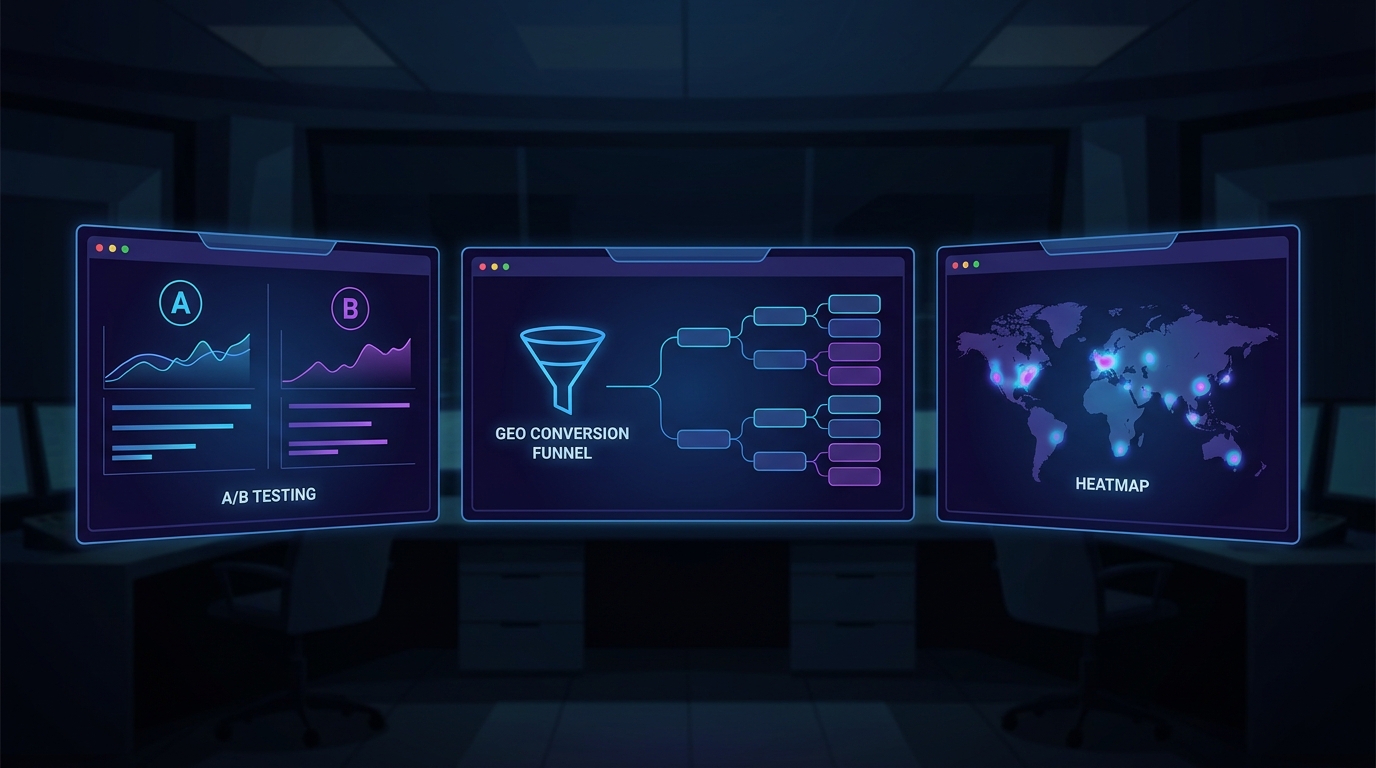
The Classic SEO-Driven Funnel: What It Does Well (and Where It Fails)
The SEO funnel is a mature, well-understood engine. At its best, it maps keyword intent to content stages, drives measurable organic traffic, and feeds a CRM pipeline with relatively predictable conversion rates at each stage. Teams have spent years optimizing it: A/B testing CTAs, refining meta descriptions for click-through rates, building internal link clusters, and aligning landing pages to SERP position intent.
For transactional and high-volume informational queries, it still delivers. E-commerce brands relying on category and product page SEO continue to generate strong ROI. B2B SaaS teams with robust blog-to-demo funnels — where a mid-funnel how-to article converts readers to trial signups — often see cost-per-acquisition figures that paid channels can't beat. The channel economics of SEO, when it works, are exceptional.
But the SEO funnel's structural weaknesses become critical when AI-referred traffic enters the picture. The entire model is built around click-through rates from search result pages — a metric that AI-generated answers actively suppress. When a buyer gets their answer directly inside a ChatGPT response, they may never click to your blog post at all. Google's own data from early 2026 shows that AI Overviews reduce click-through rates by 25–35% for queries they cover. That's not a rounding error — it's a structural erosion of the top-of-funnel volume the SEO model depends on.
The SEO funnel also struggles with attribution when AI is involved. A buyer who sees your brand named in three separate Perplexity responses over two weeks before visiting your pricing page will show up in your analytics as a direct or dark social visit. Your CRM will have no idea the AI-driven brand touchpoints happened. The funnel looks broken — low top-of-funnel, high direct conversion — when in reality, AI search is doing invisible nurturing work your current model can't measure or optimize.
"The SEO funnel was built for a world where every discovery moment left a cookie. That world is ending faster than most analytics stacks are prepared for."
The GEO Conversion Funnel: How It's Actually Built
A GEO conversion funnel doesn't replace content — it restructures the architecture around how AI-referred buyers actually behave. The funnel has four distinct layers, each requiring different optimization work than its SEO equivalent.
Layer 1: Citation Acquisition. This is the GEO equivalent of ranking. Your goal is to appear inside AI-generated responses for queries your buyers ask during research. That means publishing content that is structured to be extracted — direct answers, comparative data, specific claims with evidence, schema markup that signals factual authority. Pages built for citation often look different from pages built for search ranking: they're denser with facts, shorter in paragraph length, and built around specific questions rather than broad topic clusters.
Layer 2: Brand Context Seeding. Being cited once isn't enough. AI engines synthesize across multiple sources, and buyers use these tools across multiple sessions. You need to appear consistently, across formats (your own content, review platforms like G2 or Capterra, industry publications, comparison sites) so that the AI's composite understanding of your brand is accurate, positive, and differentiated. This is where GEO intersects directly with reputation management and thought leadership, not just content SEO.
Layer 3: Intent-Matched Landing Experiences. When a buyer does click through from an AI context — either from a citation link or a follow-up search after an AI interaction — they arrive with higher intent and more context than a typical organic visitor. Generic top-of-funnel landing pages underperform badly here. Instead, you need landing pages built around the specific comparative or evaluative questions buyers were asking when they encountered your brand in AI results. A buyer who found you through a Perplexity answer to "best project management tools for remote teams" should land on a page that speaks directly to that comparison, not your generic homepage.
Layer 4: Dark Funnel Capture and Attribution. Because so much AI-influenced discovery is invisible to standard analytics, GEO funnels require deliberate dark funnel capture mechanisms: self-reported attribution fields on forms ("How did you first hear about us?"), pipeline velocity tracking by cohort, and first-party data signals that flag brand familiarity at the point of conversion. This layer is what separates teams that can prove GEO ROI from those that can only hypothesize it. Comprehensive guidance on building this attribution layer lives in our AI search traffic conversion optimization guide, which maps measurement approaches for both B2B SaaS and e-commerce contexts.
"GEO funnel conversions don't follow a neat linear path. They require a parallel attribution infrastructure built to detect influence, not just last-click credit."
The GEO funnel also requires a different cadence of content production. SEO funnels can be front-loaded — publish a cluster, build links, watch rankings compound. GEO funnels require ongoing freshness because AI engines prioritize recently updated, factually current content. A page that earns citations today can lose them in 90 days if it's not refreshed with updated data, new comparisons, or deeper specificity. That ongoing maintenance cost is a real operational consideration teams need to plan for.
SEO Funnel vs. GEO Funnel: Direct Comparison
The differences between these two funnel architectures matter at every stage, from content production to conversion measurement. The comparison below maps the key dimensions where strategy must diverge — not because one approach is universally superior, but because the mechanics of discovery, trust, and attribution work differently in each model.
| Dimension | Classic SEO Funnel | GEO Conversion Funnel |
|---|---|---|
| Primary Discovery Mechanism | SERP click-through from ranked pages; user selects result themselves | AI-generated citation inside a synthesized answer; brand surfaces within AI response |
| Buyer Arrival Intent | Variable — depends on keyword stage (informational to transactional) | Higher on average — buyer has already processed a synthesized comparison before clicking |
| Content Optimization Target | Search ranking signals: backlinks, on-page SEO, E-E-A-T, internal linking | Citability signals: factual density, direct answers, structured data, cross-platform authority |
| Attribution Model | UTM-based, GA4 session tracking, first/last click with reasonable accuracy | Partial dark funnel; requires self-reported data, pipeline cohort analysis, first-party signals |
| Conversion Page Requirements | Intent-matched to keyword stage; CTA aligned to SERP query | Intent-matched to AI query context; comparative and evaluative framing essential |
| Content Maintenance Cadence | Front-loaded; refresh when rankings drop or algorithm updates occur | Ongoing; AI engines prioritize fresh, factually current content — 60–90 day refresh cycles recommended |
The table above highlights that these aren't parallel strategies competing for the same budget — they're addressing different stages of a buyer's discovery journey that now increasingly run in parallel. A buyer might start with an AI-generated overview, then run a traditional Google search to validate a specific claim, then return to an AI tool to compare two finalists. Both funnel types need to work together, but they require different infrastructure to do so. For a granular walkthrough of where the two funnels converge and diverge at each touchpoint, the AI search conversion funnel vs SEO funnel breakdown maps this in detail.
The Verdict: Which Funnel Should You Prioritize?
The honest answer is that prioritization depends on your current buyer mix, your existing funnel maturity, and how much of your category's research behavior has already migrated to AI-powered tools. But there are clear signals that tell you which way to lean.
Prioritize building the GEO conversion funnel if: Your average deal size is above $5,000 ACV (where AI-assisted research is nearly universal in 2026), your organic traffic has declined despite stable or improving rankings (a sign AI Overviews are intercepting queries), your self-reported attribution data shows a growing percentage of "I just Googled you" or "I saw you mentioned somewhere" responses, or your category has active AI-generated comparison content that doesn't accurately represent your product.
Maintain the SEO funnel if: Your conversion volume is dominated by high-frequency transactional queries that AI engines don't yet answer comprehensively, your buyer journey is short and impulsive (sub-$500 e-commerce), or your existing SEO funnel is generating pipeline at a cost-per-acquisition you can't currently beat with other channels.
For most B2B SaaS and mid-market e-commerce teams in 2026, the right answer is a hybrid architecture. Run both funnels simultaneously but with distinct optimization workstreams. Allocate 30–40% of your content and CRO resources to GEO-specific infrastructure (citation content, dark funnel attribution, AI-intent landing pages) while continuing to optimize SEO funnel performance for queries where click-through still drives meaningful volume.
"The brands winning in 2026 aren't choosing between SEO and GEO funnels — they're building conversion infrastructure that captures buyers regardless of which discovery path they took."
The risk of inaction is asymmetric. If you delay building the GEO funnel and your competitors are already being cited consistently across AI tools, the brand context buyers encounter during AI-assisted research will systematically favor them. Correcting that competitive disadvantage takes 6–12 months of consistent GEO work — there's no shortcut equivalent to paying for better placement the way paid search allows.
How to Make the Transition From SEO to GEO Funnel Thinking
The transition doesn't require dismantling your existing SEO infrastructure. It requires layering GEO-specific conversion components on top of it, then gradually shifting resource allocation as you measure which funnel layer is driving more pipeline. Here's a practical sequence for doing that in 90 days.
Weeks 1–2: Audit your current AI citation footprint. Run your target buyer queries through ChatGPT, Perplexity, Gemini, and Copilot. Document where your brand appears, where competitors appear, and what claims the AI engines make about your category. This baseline tells you how much GEO ground you're starting from and which content gaps are most urgent to close.
Weeks 3–4: Add self-reported attribution to all conversion forms. A single optional field — "How did you first hear about us?" with an open text or dropdown — gives you immediate signal on dark funnel influence. Segment responses monthly and look for AI-related or brand-awareness-without-source responses. This is your leading indicator of GEO funnel activity before you have robust measurement infrastructure.
Weeks 5–6: Build or update two to three intent-matched landing pages for your highest-value AI query contexts. These pages should directly address the comparative questions buyers are asking AI engines in your category. Structure them with clear factual claims, specific differentiators, and conversion paths appropriate for buyers who arrive with higher context. Think evaluation-stage pages, not awareness-stage pages.
Weeks 7–8: Publish or update citation-optimized content targeting five to ten high-value AI query patterns. Focus on formats that AI engines consistently extract from: FAQ-structured answers, numbered comparison breakdowns, specific data claims with attribution, and expert-authored opinion pieces on category trends. Prioritize depth and factual specificity over volume.
Weeks 9–12: Establish a 60-day content refresh schedule and begin pipeline cohort analysis. Tag leads that enter through dark funnel paths (direct, self-reported AI/brand awareness) and track their pipeline velocity separately from tracked organic leads. If GEO-influenced leads close faster or at higher ACV — which the data consistently suggests they do — you have the business case to accelerate GEO funnel investment in the next quarter.
The transition is iterative, not a one-time rebuild. The teams that execute it well treat GEO funnel development as a standing operational capability rather than a project with an end date — because the AI search landscape itself is still evolving rapidly enough that static strategies become obsolete within a single quarter.
Frequently Asked Questions
What is a GEO conversion funnel strategy and how is it different from standard SEO funnels?
A GEO conversion funnel strategy is a system for converting buyers who discover your brand through AI-generated search responses (from tools like ChatGPT, Perplexity, or Gemini) rather than traditional search engine results pages. Unlike an SEO funnel — which is optimized around click-through rates from ranked pages and UTM-trackable sessions — a GEO funnel is built to capture buyers who arrive with higher pre-existing context, measure influence through dark funnel attribution methods, and convert through intent-matched landing pages designed for evaluative rather than informational intent. The two funnels require different content formats, different measurement infrastructure, and different CRO optimization priorities.
How do you measure conversions from AI search traffic when UTM tracking doesn't work?
Measuring AI-influenced conversions requires a combination of self-reported attribution (asking buyers how they first heard about you on conversion forms), pipeline cohort analysis that tracks velocity and ACV for direct and unattributed leads separately, and first-party behavioral signals like branded search spikes or unusually high landing page engagement from visitors with no referrer. Some teams also use post-sale customer interviews to surface AI-assisted research that never appeared in analytics. No single method is complete, but combining two to three of these approaches gives a defensible picture of GEO funnel performance.
How long does it take for GEO content to start generating citations and driving pipeline?
Citation velocity varies by AI engine and content type, but most teams see initial citation appearances within four to eight weeks of publishing well-structured, factually dense content targeting specific AI query patterns. Pipeline impact typically takes longer — three to six months — because AI-influenced buyers often go through multiple research sessions before converting, and dark funnel attribution methods need sufficient data volume to produce reliable cohort insights. Teams that combine citation-optimized content with intent-matched landing pages and self-reported attribution infrastructure tend to see measurable GEO pipeline contribution within a single quarter.
Should B2B SaaS companies abandon SEO funnels to focus entirely on GEO conversion funnels?
No — and the premise of an either/or choice is itself a strategic mistake. SEO funnels continue to generate strong ROI for queries where click-through from traditional search results remains high, and that still represents a significant share of B2B SaaS discovery in 2026. The correct approach is a hybrid architecture where GEO funnel infrastructure (citation content, dark funnel attribution, AI-intent landing pages) is built as an additional layer rather than a replacement. Most B2B SaaS teams should allocate 30–40% of content and CRO resources to GEO-specific work while maintaining SEO funnel optimization for high-volume, click-through-viable query sets.