This MCP SEO automation case study documents how a 6-person in-house SEO team at a mid-market e-commerce brand deployed Model Context Protocol-connected AI agents — wired directly to Semrush and Ahrefs — and cut their weekly audit cycle from 14 hours to under 4, while surfacing three times as many actionable technical issues as their previous manual process. The results reshaped how the team thinks about bandwidth, prioritization, and what "done" actually means in a modern SEO workflow.
The MCP SEO Automation Case Study: Context and Challenge
The brand in question sells consumer electronics accessories across 11 product categories, with approximately 38,000 indexable URLs. Their SEO team of six — two technical SEOs, two content strategists, one analyst, and a team lead — had been running on a hybrid stack of manual crawls, spreadsheet-based reporting, and a patchwork of API scripts held together by institutional knowledge only two people understood.
Every Monday morning started the same way: someone ran a Screaming Frog crawl, exported the results, merged them manually with Ahrefs backlink data and Semrush position tracking exports, and then spent the better part of two days triaging the combined output. The full audit cycle — from crawl to prioritized issue list — averaged 14.2 hours per week. The analyst carried the heaviest burden, dedicating roughly 35% of her working hours to data wrangling that produced no direct SEO output on its own.
The stakes were real. The site was sitting on a cluster of crawl budget inefficiencies, duplicate metadata across product variants, and an internal linking structure that hadn't been systematically reviewed in 18 months. The team knew the problems existed. They simply lacked the throughput to find them all, validate them, and prioritize fixes before the next week's issues arrived.
"We weren't slow because we lacked skill. We were slow because every data source lived in a different place, and connecting them required a human in the middle every single time."
The team lead estimated that at their current velocity, a complete audit of all 38,000 URLs — at the level of granularity needed to catch structural issues — would take approximately 11 weeks. By the time the audit finished, the site would have changed enough to render parts of it obsolete. Something had to change structurally, not just operationally.
Strategy and Approach: What Was Decided — and What Was Deliberately Skipped
After evaluating options in Q1 2026, the team lead and their engineering counterpart settled on deploying MCP-connected AI agents as the connective layer between their existing tools. The core insight was that they didn't need to replace Semrush or Ahrefs — those tools were already doing their jobs well. The problem was the gap between tools: the manual, human-mediated process of pulling data from each platform, normalizing it, and feeding it into a decision-making workflow.
For a deeper grounding in the architecture behind this decision, the team referenced resources on MCP SEO automation and how Model Context Protocol enables AI agents to call tool APIs contextually rather than statically. That framing was critical: the agents wouldn't replace analyst judgment, they would eliminate the mechanical labor that preceded it.
What they deliberately chose NOT to do is equally instructive:
- They did not build a custom crawling infrastructure. Screaming Frog remained in the stack, now triggered and parsed by an agent rather than a human.
- They did not attempt to automate content creation. The AI agents were scoped strictly to audit, triage, and reporting — not recommendations or copy.
- They did not deploy agents without a human approval gate. Every issue list generated by an agent required sign-off from a technical SEO before entering the sprint backlog.
- They did not try to replace their analyst. The goal was to redirect her time, not eliminate her role.
This constraint-first philosophy kept the project focused and the governance model defensible to internal stakeholders who were skeptical of AI reliability in a production SEO environment.
Implementation: Tools, Timeline, and the Governance Model They Built
The implementation ran across eight weeks, broken into three phases. Week one was scoping and API access configuration — establishing MCP server connections for Semrush's Position Tracking and Site Audit APIs, Ahrefs' Backlinks and Organic Keywords endpoints, and the Google Search Console Data API. Weeks two and three covered agent architecture: defining which agent handled which data source, what queries each agent was authorized to run, and what output format each produced.
Weeks four through six were integration and testing, including deliberate stress tests where the team fed the agents URLs with known issues — pages they had already manually audited — to validate detection accuracy. Weeks seven and eight were live deployment with parallel running: the old manual process and the agent pipeline ran simultaneously so results could be compared before the team fully switched over.
| Phase | Duration | Key Activities | Owner |
|---|---|---|---|
| Scoping & API Setup | Week 1 | MCP server config, API credential management, scope definition | Engineering + Team Lead |
| Agent Architecture | Weeks 2–3 | Agent role definition, query authorization, output schema design | Engineering + Technical SEOs |
| Integration & Testing | Weeks 4–6 | Known-issue stress tests, accuracy validation, false-positive rate logging | Analyst + Technical SEOs |
| Parallel Live Deployment | Weeks 7–8 | Simultaneous manual + agent runs, result comparison, process handoff | Full Team |
The governance model centered on three rules: agents propose, humans approve, and every agent action is logged with a timestamp and the query that produced it. This created an audit trail that the team lead used in stakeholder reviews to demonstrate exactly what the agents had and hadn't done — an important credibility mechanism in the early weeks. For anyone looking to design similar end-to-end pipelines, the architectural thinking behind SEO workflow automation with AI agents provides a solid structural foundation before you write a single line of configuration.
Results After 90 Days: Before-and-After Metrics
The 90-day measurement window began the day parallel running ended. All metrics compare the 90-day pre-implementation average against the 90-day post-implementation period.
| Metric | Before (Baseline) | After (90 Days) | Change |
|---|---|---|---|
| Weekly audit cycle time | 14.2 hours | 4.1 hours | −71% |
| Issues identified per weekly audit | Avg. 47 issues | Avg. 142 issues | +202% (3x) |
| Analyst hours on data wrangling | ~35% of working week | ~9% of working week | −74% |
| Time from issue detection to sprint backlog | 3.4 days avg. | 0.8 days avg. | −76% |
| False-positive rate (agent-flagged non-issues) | N/A (manual baseline) | 6.2% of flagged issues | Established benchmark |
| Critical issues caught before indexing impact | 2 in prior 90 days | 9 in post 90 days | +350% |
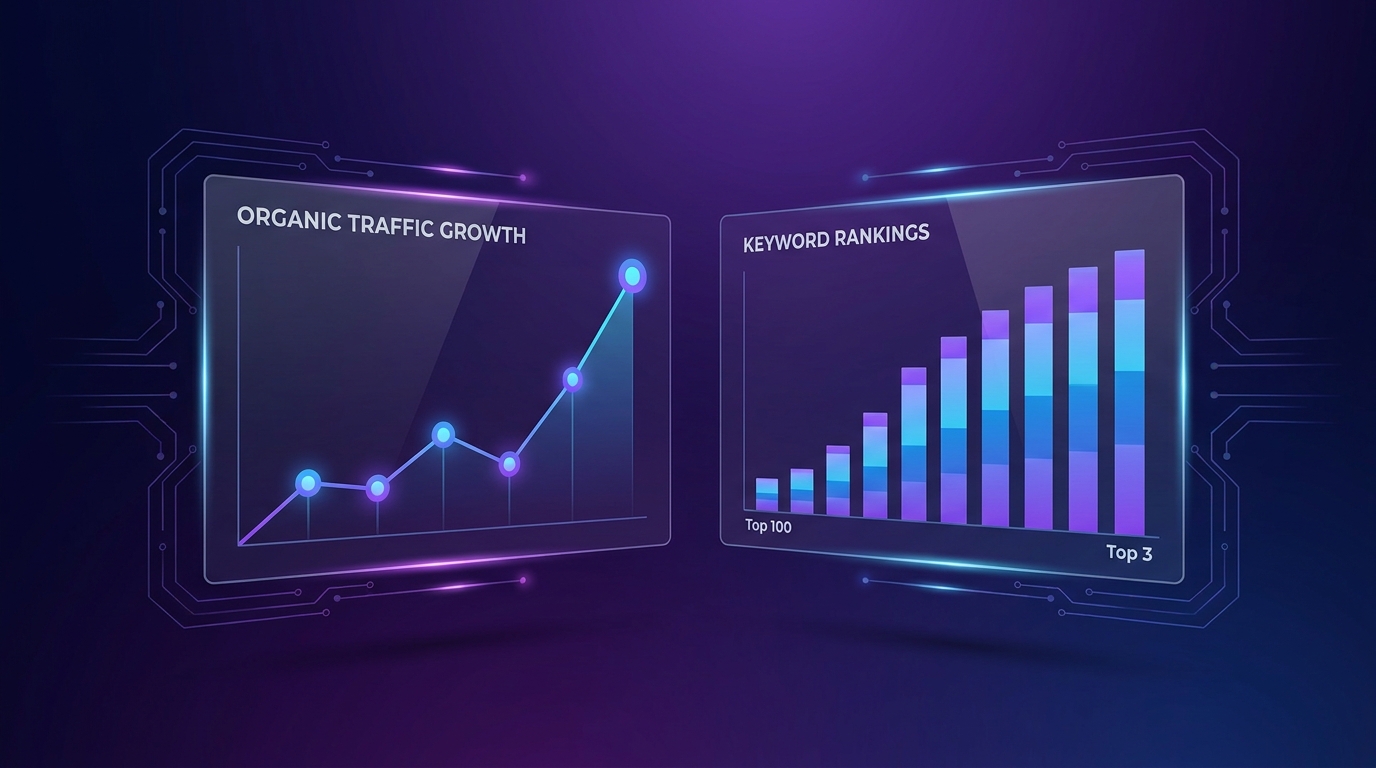
The most significant organic performance outcome — though the team is careful not to attribute it solely to the agent deployment — was a 23% increase in pages reaching the first SERP position for their tracked keyword set over the same 90-day window. The team connects this to faster fix deployment: issues that previously sat in a backlog for 12–18 days were now being addressed within 4 days on average, compressing the feedback loop between detection and ranking impact.
The analyst's redirected time was reinvested into a content gap analysis project that had been shelved for seven months. That project alone identified 61 new cluster opportunities, 14 of which moved into production content by the end of the 90-day window.
Key Learnings: What Worked, What Failed, and What Surprised Everyone
What worked: The human approval gate, which some team members initially saw as friction, turned out to be essential for trust-building rather than just risk mitigation. Having a technical SEO review and sign off on each agent-generated issue list meant the team developed an intuition for how the agents reasoned — which made them better at spotting when an agent was operating outside its reliable zone. The governance log also became an unexpected training tool: reviewing it weekly helped the team refine agent query parameters based on real patterns.
What failed: The first version of the Semrush Site Audit agent was configured to flag all 4xx errors regardless of whether they were linked internally. This produced a noise problem in week one: 38% of flagged issues were orphaned 4xx pages with zero internal links and negligible traffic — technically issues, practically irrelevant. Rebuilding the query logic to filter by internal link count and crawl frequency fixed the signal quality within two weeks, but it cost the team confidence during a critical early period.
What surprised everyone: The agents uncovered a pattern no one had been looking for. Across 1,200 product variant URLs, the agents detected that 74% shared metadata with their parent category page within a Levenshtein distance of 8 characters — essentially near-duplicate titles and descriptions that no manual spot-check would have caught at scale. Fixing this cluster became the team's highest-priority technical project in month two.
"The agents didn't just do our job faster. They found a category of problem we didn't know we had — because we'd never had the throughput to look for it systematically."
How to Replicate This: An Actionable Checklist
If you're building a similar system, the following sequence reflects what this team would do differently if starting from scratch — incorporating the lessons from what failed.
- Audit your current time spend first. Log every manual SEO task by hour for two weeks before scoping agents. You'll find the right targets — and avoid automating things that don't actually consume meaningful time.
- Define agent scope in writing before touching APIs. Specify which endpoints each agent can call, what it cannot do, and what the output schema must look like. Ambiguity here creates noise problems later.
- Start with one data source, not three. This team tried to connect Semrush, Ahrefs, and GSC simultaneously in the architecture phase. Connecting one source first, validating it thoroughly, then adding the next would have shortened the integration phase by at least a week.
- Build the governance log before going live. Timestamp every agent query and output from day one. You'll need this for stakeholder credibility and for debugging false-positive patterns.
- Run parallel for at least two full audit cycles. One week of parallel running is not enough. Two complete cycles give you enough data to calibrate false-positive thresholds with confidence.
- Filter noise at the query level, not the output level. When agents surface irrelevant issues, fix the query logic rather than adding post-hoc filters to the output. Output-level filtering masks bad queries and makes future debugging harder.
- Protect analyst time explicitly. Redirect saved hours to high-judgment work — gap analysis, strategy, testing — before workflow creep fills them with other low-value tasks. The time savings only compound if they're deliberately allocated.
- Review agent performance monthly. APIs change, site structure changes, and agent query logic that was optimal at launch may drift. A monthly 30-minute review of the governance log prevents silent degradation.
Frequently Asked Questions
How long does it take to set up MCP-connected SEO agents from scratch?
Based on this team's implementation, an eight-week timeline is realistic for a team with engineering support available at roughly 20% capacity. Teams without dedicated engineering involvement should expect the timeline to extend to 12–14 weeks, as API configuration and agent architecture require technical attention that SEOs alone typically cannot provide. The most time-intensive phase is integration testing, not initial setup — plan accordingly.
Do you need to replace your existing SEO tools like Semrush or Ahrefs to use MCP agents?
No — and this case study illustrates exactly that. MCP agents connect to your existing tools' APIs rather than replacing them, acting as a coordination and automation layer between platforms that already hold the data. The value comes from removing the human data-wrangling step between tools, not from substituting the tools themselves. Your existing subscriptions and the institutional knowledge built around them remain intact.
What is a realistic false-positive rate for AI agents running SEO audits?
This team achieved a 6.2% false-positive rate after two rounds of query logic refinement — meaning roughly 1 in 16 flagged issues required no action. Industry practitioners report that initial deployments often see false-positive rates between 15% and 30%, which decrease significantly once query filters are tuned to account for site-specific factors like internal link structure and crawl frequency thresholds. A human approval gate in the workflow ensures false positives never reach the development backlog without review.