The debate over TikTok Shop vs Instagram Live shopping has moved from marketing chatter to boardroom priority, as live commerce now accounts for a meaningful share of direct-to-consumer revenue for brands across fashion, beauty, food, and electronics. Both platforms offer native checkout, creator ecosystems, and algorithmic discovery — but they serve fundamentally different audiences, reward different content styles, and charge sellers in very different ways. This guide breaks down exactly where each platform wins, where it falls short, and which one deserves your budget in 2026.
TikTok Shop vs Instagram Live Shopping: Setting the Stage
Live commerce is no longer an experiment borrowed from Asian markets — it is a mature, measurable sales channel that Western brands have folded into their always-on digital strategy. Yet the two platforms that dominate the conversation, TikTok Shop and Instagram Live Shopping, operate from very different philosophical premises. TikTok Shop was engineered from the ground up around commerce discovery: the algorithm surfaces shoppable content to users who have never followed a brand, making cold acquisition the platform's core strength. Instagram Live Shopping, by contrast, grew out of an existing relationship-first social graph, meaning it rewards brands that already have an engaged following and want to deepen purchase intent among warm audiences.
Understanding this structural difference is the foundation of any smart platform decision. Before you invest in studio equipment, creator partnerships, or paid traffic, you need to know which architecture matches your current business stage — and which one can scale with you. If you're still mapping out your wider channel mix, the broader livestream ecommerce platform comparison covers TikTok Shop, Instagram, YouTube Shopping, and more in a single scored framework.
"Brands that align their live commerce platform choice with their audience acquisition strategy — rather than their personal social media preference — consistently report faster payback periods and lower cost-per-order."
The sections below isolate each platform's mechanics, then put them head-to-head across the six dimensions that actually move the ROI needle: audience reach, checkout depth, creator tools, fee structure, analytics maturity, and content shelf life.
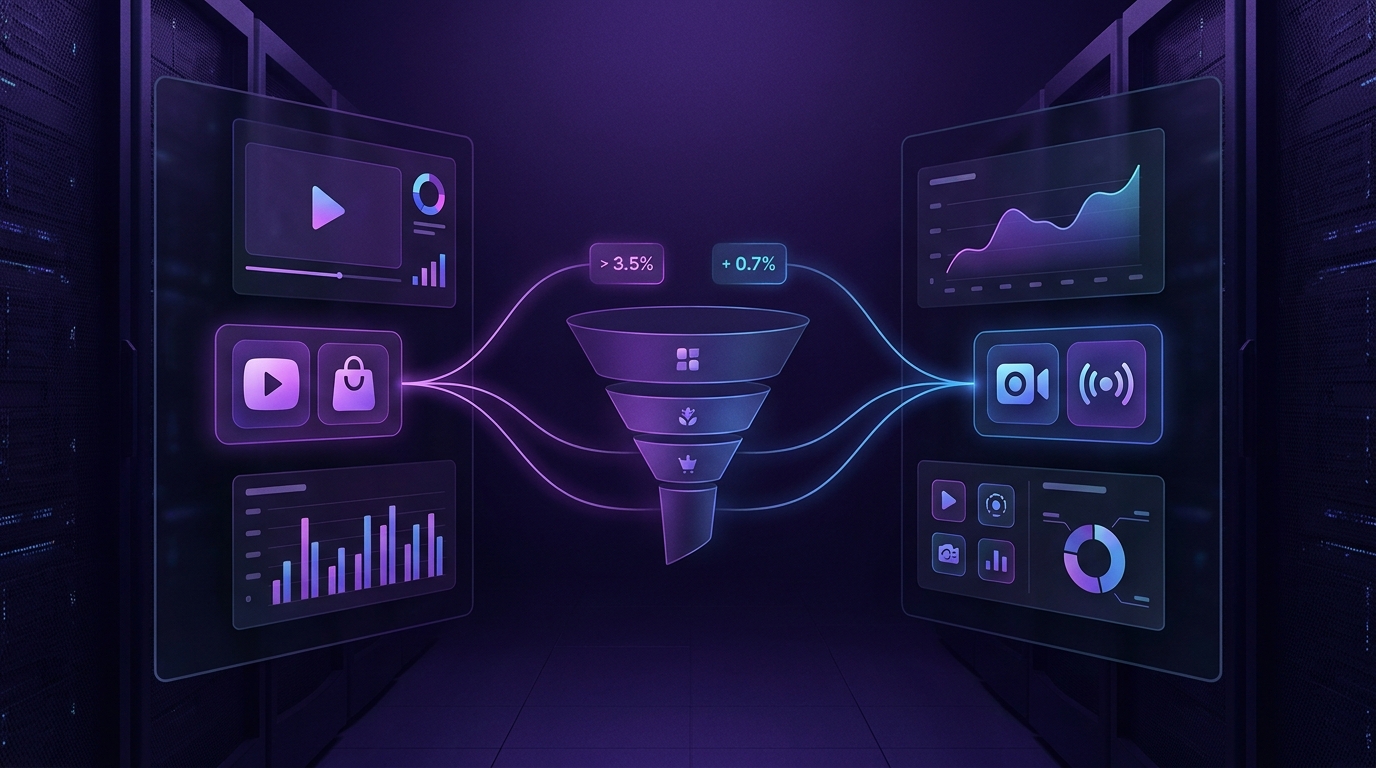
TikTok Shop Live: Strengths, Weaknesses, and Who It's Built For
TikTok Shop Live allows sellers to pin products directly to a live video feed, letting viewers tap, review, and purchase without leaving the app. The native checkout flow is tight — payment credentials stored in TikTok's system mean a viewer can complete a purchase in under 30 seconds from the moment they tap a product card. That frictionless path is the platform's single biggest commercial advantage.
The algorithm is the second major asset. Unlike Instagram, TikTok distributes live content beyond your follower base by default. A brand with 2,000 followers can reach tens of thousands of relevant viewers in a single session if early engagement signals are strong. This discovery-first architecture makes TikTok Shop the go-to platform for brands in growth mode, new product launches, and flash-sale mechanics where urgency drives impulse conversion. Industry practitioners consistently report that TikTok Shop live sessions outperform on new customer acquisition rate compared to any other native live commerce channel available in Western markets today.
The weaknesses are real, though. TikTok's audience skews younger — heavily weighted toward the 18–34 demographic — and average order values tend to be lower than on Instagram, reflecting both the demographic and the impulse-driven content environment. Brands selling luxury goods, high-consideration B2C products, or anything that requires extended trust-building often find TikTok Live a difficult environment to convert. Content on TikTok also has a short shelf life; recorded live sessions rarely generate meaningful organic views after the first 24 hours, limiting the long-tail ROI potential.
Fee structure: TikTok Shop currently charges sellers a referral fee that varies by category, typically ranging from around 5% to 8% of the sale price, plus optional fulfillment fees if you use their warehousing service. Creators participating in the affiliate program earn a commission funded by the seller, which you set during product listing setup.
Best fit for: DTC brands targeting Gen Z and younger Millennials, beauty and personal care, fashion, food and beverage, consumer electronics accessories, and any category where price point is under $150 and impulse purchase is a realistic conversion mechanic.
Instagram Live Shopping: Strengths, Weaknesses, and Who It's Built For
Instagram Live Shopping integrates product tags directly into the live broadcast interface, drawing from a brand's connected Meta Commerce catalog. Viewers can tap a product, review details, and check out either within Instagram (via Meta Pay) or through a redirect to the brand's own website — a dual-path checkout that gives sellers more control over the customer data they capture. This is a meaningful differentiator for brands that prioritize first-party data ownership and post-purchase CRM flows.
Instagram's core strength is its audience quality relative to intent. Users who follow a brand on Instagram have, by definition, opted into a relationship with that brand. Live shopping sessions on Instagram function more like exclusive member events than open storefronts — conversion rates per viewer are often higher than TikTok, even when raw viewer numbers are lower. Average order values also trend meaningfully higher on Instagram Live, reflecting an older, more affluent demographic (the platform's strongest engagement is in the 25–44 bracket) and a content environment that supports longer, more considered purchase journeys.
"Instagram Live viewers already trust the brand before the stream begins — the session is closing the sale, not building awareness from scratch."
The platform's weaknesses center on discovery and algorithm support. Instagram does not aggressively surface live shopping content to non-followers the way TikTok does. If your follower base is small or disengaged, your live audience will be thin, and paid promotion through Meta Ads is typically required to meaningfully scale viewership. That adds a media budget layer that TikTok's organic reach can sometimes offset. Instagram's creator affiliate tools, while improving, are also less mature than TikTok Shop's affiliate ecosystem, which has a larger pool of commerce-native creators already familiar with live selling mechanics.
Fee structure: Instagram Live Shopping does not charge a separate platform transaction fee for brands using their own website checkout via redirect. For purchases completed natively through Meta Pay, Meta charges a selling fee of approximately 5% per shipment (with a minimum flat fee for low-value orders). These rates have been relatively stable, but sellers should verify current terms in their Meta Commerce Manager dashboard.
Best fit for: Established brands with engaged Instagram followings, lifestyle and luxury categories, health and wellness, home décor, and any product where the purchase decision benefits from a more editorial, relationship-driven presentation style.
Head-to-Head Comparison: Six Dimensions That Matter
Use this table as a fast-reference framework when pitching platform decisions internally or aligning your team around a primary live commerce channel. The ratings reflect typical brand experience in 2026 across a range of categories — your specific niche may shift some scores.
| Dimension | TikTok Shop Live | Instagram Live Shopping | Edge Goes To |
|---|---|---|---|
| Audience Discovery | Algorithm-driven; reaches non-followers by default; exceptional for cold acquisition | Primarily follower-based; limited organic discovery; paid traffic usually required to scale | TikTok Shop |
| Average Order Value | Lower; impulse-oriented; stronger under $100 price points | Higher; considered-purchase environment; stronger over $100 price points | Instagram (for premium brands) |
| Native Checkout Depth | Fully native, fast; all transactions close in-app with stored credentials | Dual path: native Meta Pay or redirect to brand site; better for first-party data capture | Tie (depends on data strategy) |
| Creator Ecosystem | Large, commerce-native affiliate pool; robust commission tooling; easier creator onboarding | Growing affiliate network; strong influencer base but fewer dedicated live-selling specialists | TikTok Shop |
| Analytics & Attribution | Strong live-session metrics; attribution within TikTok ecosystem is solid; limited cross-channel data | Meta's attribution suite is mature and integrates well with broader ad measurement; strong for omnichannel brands | Instagram (for omnichannel brands) |
| Content Shelf Life | Short; live replays rarely trend post-24h; repurpose clips to Reels/Feed for extended reach | Replays accessible longer; IGTV integration extends content life; better for evergreen product storytelling |
Verdict and Recommendation: Which Platform Wins Your ROI Race?
There is no universal winner — but there is almost always a clear winner for your specific brand stage and category. Here is how to read the decision:
Choose TikTok Shop Live as your primary channel if: You are a growth-stage DTC brand with limited existing audience, you sell products under $120 with strong visual appeal and impulse purchase potential, you want to leverage creator affiliates rather than investing heavily in your own live-selling infrastructure, and you can produce authentic, fast-paced content that fits TikTok's entertainment-first environment. The platform's discovery engine will work overtime on your behalf, and the commerce-native creator pool means you can scale without a large internal team.
Choose Instagram Live Shopping as your primary channel if: You have an established Instagram audience with strong engagement metrics, you sell in lifestyle, luxury, wellness, or home categories where average order values exceed $100, you need first-party data capture for your post-purchase CRM, or your brand story requires the kind of editorial depth that a longer-form, relationship-driven live format supports better. Instagram's tighter Meta attribution also makes it easier to prove ROI to finance teams that are skeptical of social commerce.
The hybrid play: Many brands in 2026 are running both platforms with intentional division of labor — TikTok Shop for acquisition-focused flash events with creator affiliates, Instagram Live for retention-focused exclusive drops with their existing community. This model requires more operational overhead but delivers the broadest ROI spread. For a full operational playbook on structuring this, the livestream shopping strategy guide covers always-on programming frameworks, creator briefing templates, and session cadence planning in detail.
How to Make the Transition (or Run Both)
Whether you are moving from one platform to the other or building out a dual-channel operation, the transition process follows a predictable sequence that minimizes revenue disruption.
Step 1 — Audit your current live commerce performance. Pull your existing session data: average concurrent viewers, peak drop-off point, conversion rate per viewer, average order value, and return rate. These benchmarks tell you which platform gap you are trying to close. If conversion rate is your problem, the issue is usually checkout friction or audience-product mismatch — not the platform you're on. If discovery is your problem, TikTok Shop is likely the fix.
Step 2 — Catalog and sync your products. Both platforms pull from a product catalog, but the technical requirements differ. TikTok Shop uses its own seller center with specific image ratios, title character limits, and compliance categories. Instagram pulls from your Meta Commerce catalog, which is often already connected if you run Meta Ads. Budget two to four weeks for catalog quality review, especially if you have a large SKU count.
Step 3 — Run a pilot season before committing budget. Schedule four to six live sessions on the new platform over six weeks before scaling ad spend or creator investment. Track session-level data obsessively: which products generated the most taps, which host moments caused drop-offs, and what in-session prompts drove the highest conversion urgency. Iteration speed in those first six weeks determines your long-term economics far more than your initial production budget.
Step 4 — Build your creator roster before you need it. On TikTok Shop, this means opening your affiliate program and inviting creators to your product marketplace early — some of the highest-performing live-selling creators on TikTok are booked weeks in advance. On Instagram, this means identifying 5–10 micro-influencers in your category who already run Instagram Lives and initiating co-hosting conversations early in your planning cycle.
Step 5 — Align your supply chain with live demand spikes. Live commerce creates sudden, concentrated demand that can overwhelm standard fulfillment timelines. Ensure your 3PL or in-house warehouse team has live session demand built into their SLA framework, and consider capping session inventory at a realistic fulfillment ceiling to protect post-purchase experience and review scores — both of which feed directly back into algorithmic distribution on both platforms.
Frequently Asked Questions
Is TikTok Shop live selling better than Instagram Live for small businesses?
For small businesses with limited existing social audiences, TikTok Shop is typically the stronger starting point because its algorithm actively distributes live content to non-followers, reducing dependence on a pre-built audience. The platform's creator affiliate program also allows small brands to generate sales through established creators without a large upfront media budget. Instagram Live Shopping tends to reward brands that already have an engaged follower base, which puts newer or smaller accounts at a discovery disadvantage.
What are TikTok Shop seller fees for live shopping in 2026?
TikTok Shop charges sellers a referral fee that typically ranges from around 5% to 8% depending on product category, applied to the sale price. If you use TikTok's fulfillment or warehousing services, additional logistics fees apply. Creator affiliate commissions are set by the seller within the TikTok Shop affiliate program and are funded from the seller's margin rather than charged separately by the platform. Always verify current rates in your TikTok Seller Center account, as fee structures are updated periodically.
Does Instagram Live Shopping have a transaction fee?
When buyers complete a purchase natively through Meta Pay within the Instagram app, Meta charges a selling fee of approximately 5% per shipment, with a minimum flat fee applied to low-value transactions. Brands that redirect buyers to their own website for checkout are not charged a separate Instagram transaction fee, though standard payment processor fees still apply. This makes the redirect checkout path attractive for brands that prioritize margin control and first-party data capture.
Which platform has better live shopping analytics?
Both platforms provide live-session metrics including peak concurrent viewers, click-through rate on product cards, and gross merchandise value per session. Instagram's analytics advantage lies in its deep integration with Meta's broader attribution and advertising measurement suite, which is more useful for brands running omnichannel campaigns across Meta's family of apps. TikTok Shop's analytics are strong within its own ecosystem but offer less cross-channel connectivity for brands that run significant paid media outside TikTok.
Can you run TikTok Shop and Instagram Live Shopping at the same time?
Yes, and many mid-to-large DTC brands do exactly this in 2026, using TikTok Shop for audience acquisition and flash-sale events while using Instagram Live for community-facing product launches and retention-focused programming. The main operational challenge is keeping product catalog data, pricing, and inventory levels synchronized across both platforms to avoid overselling or inconsistent customer experience. A dedicated live commerce operations role or a commerce platform integration tool is worth the investment once you reach consistent session frequency on both channels.
What types of products sell best on TikTok Shop Live vs Instagram Live?
TikTok Shop Live performs strongest for visually demonstrable products with a price point under $120 that benefit from impulse-purchase dynamics — beauty, skincare, fashion accessories, kitchen gadgets, and consumer tech accessories are consistent performers. Instagram Live Shopping tends to convert better for lifestyle products, home décor, wellness, and fashion categories where the average order value exceeds $100 and the buyer benefits from a more considered, editorial presentation. Luxury and high-consideration categories almost universally perform better on Instagram due to its audience demographics and content environment.